Physical Address
304 North Cardinal St.
Dorchester Center, MA 02124
Physical Address
304 North Cardinal St.
Dorchester Center, MA 02124

Published: August 4, 2026 | Category: SEO, Social Media & Content Strategy
For the last decade, Google Search Console has been the exclusive club of website owners. You had a verified domain, you got the data. No website? No data. You were effectively blind to how your content performed in Google’s ecosystem.
That just changed.
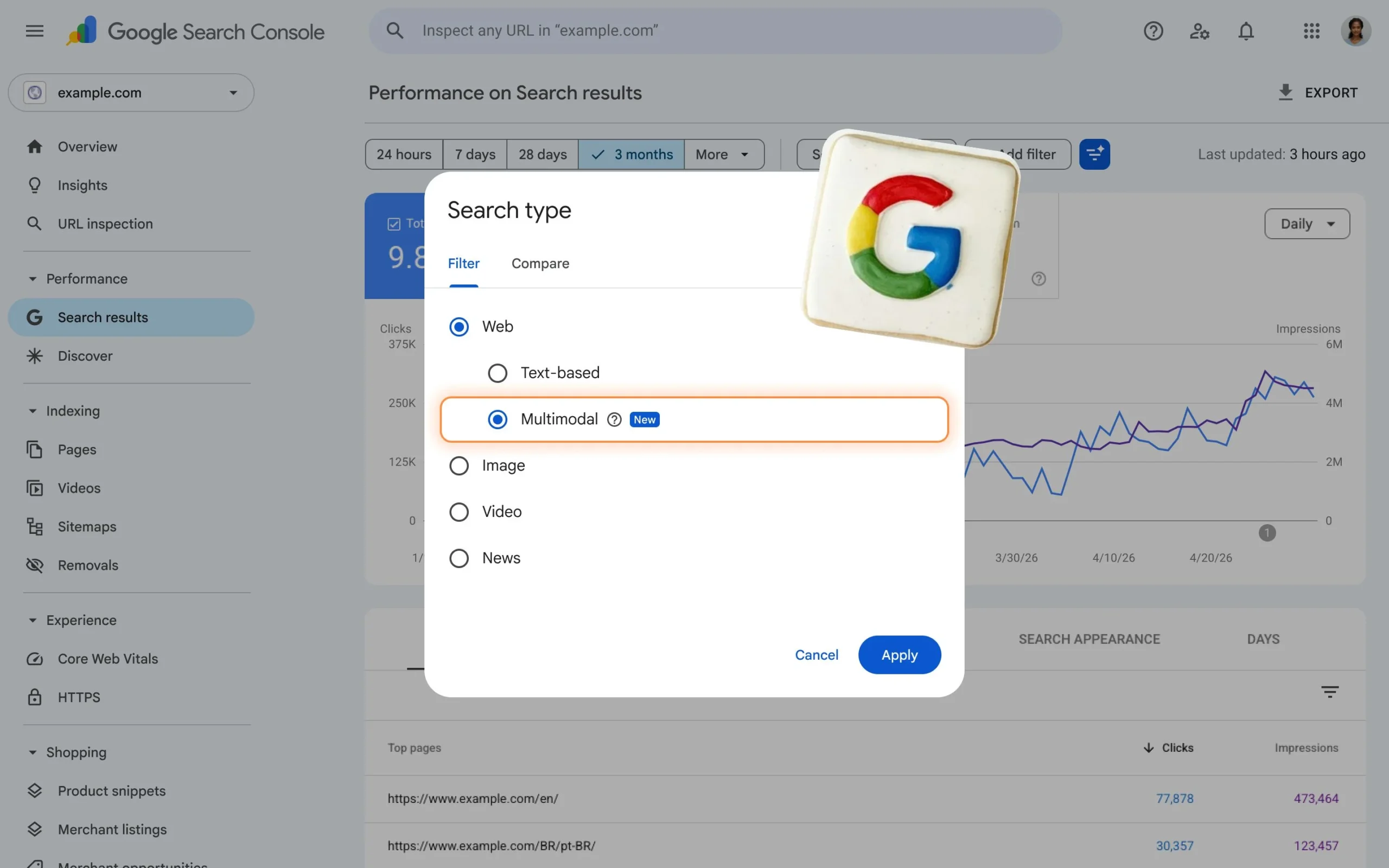
Google is introducing a new property type in Search Console called platform properties, which lets you monitor how social media and video posts perform in Google Search and Discover. This feature supports platforms such as Instagram, TikTok, X, and YouTube and is available even to creators who don’t have their own websites.
That’s not a minor update. That’s Google officially extending its analytics infrastructure to cover the social and video content it’s already surfacing in Search and Discover and handing creators the data to see exactly what’s happening.
Here’s what this feature does, why it matters, and what you should be doing with it.
Before the implications, the mechanics because the name “platform properties” tells you nothing useful.
Moshe Samet, Product Manager Lead for Search Console, announced the feature in a Search Central blog post. Once an account is connected, a platform property shows which search terms lead people to your posts and how your audience interacts with that content.
Think of it as Search Console, rebuilt for social. Same underlying data infrastructure of clicks, impressions, queries, performance trends being applied to your Instagram Reels, TikTok videos, X posts, and YouTube content instead of your website pages.
Each platform property includes the Performance report, which displays total clicks, impressions, and other related metrics, allowing filtering and sorting to identify which posts and queries generate the most traffic. You can also export the data for further analysis in other tools. The Insights report provides an overview of recent traffic patterns, your most successful posts, and the ways users find your account on Google. Achievements monitor progress toward milestones, such as surpassing a new total click threshold from Search within a 28-day period.
Clean, structured, exportable. The same data workflow you already use for your website, now covering your social presence.
Google launched Search Profiles in June for qualified creators with significant followings. These are two separate things, and conflating them will lead you to the wrong conclusions.
Platform properties are distinct from Search profiles, which Google introduced in June as public profile pages for qualified creators and publishers. A Search profile is a shareable page that consolidates a creator’s content for followers. In contrast, a platform property focuses on analytics, showing how those posts perform in Search rather than directly exposing them to an audience.
Search Profile = public-facing creator page in Google Search. Platform Property = private analytics dashboard showing you how your social content performs in Search.
Different tools, different purposes, different audiences. Search Profiles are about discoverability. Platform Properties are about measurement. You want both, but they solve different problems.
Setting one up involves following Search Console’s verification process: open Search Console, navigate to the verification page or property selector, select Add property, then choose Instagram, TikTok, X, or YouTube and follow the on-screen instructions to authorize the connection.
That’s it. No code. No DNS records. No meta tag verification. Just connect the account and authorize.
The one caveat: Platform properties will be gradually available over the next few weeks, so the option might not be visible in your account immediately. Google is initially launching with four supported platforms and directs creators to its help documentation for setup guidance.
If you don’t see it yet, check back weekly. It’s rolling out, not a regional test, a phased global rollout.
This is the part most coverage is missing. The announcement sounds procedural a new property type in an existing tool. But there are three reasons this is genuinely significant for marketers and creators.
This isn’t Google starting to index TikTok or Instagram content. They’ve been doing it. Short-form videos, social posts, and creator content have been appearing in Google Search results and Discover feeds for years. But until now, creators had zero visibility into that traffic. Zero.
The current feature builds on a December 2025 experiment that initially integrated social-channel data into Search Console.
That experiment confirmed something Google already knew: social content is generating search traffic, and creators deserve to see it. Platform Properties is the scaled, official version of that insight.
The implication is direct: if your TikTok or Instagram content is already showing up in Google Search, you’ve been getting organic search visibility that you’ve had no way to measure. That changes today.
This feature allows creators who’ve never had a verified site to see how their posts gain visibility in Search.
This is a legitimately democratising move. A creator who built an audience entirely on TikTok or YouTube, with no website and no traditional SEO presence, can now see their Google Search performance for the first time. Query data. Click data. What’s working. What’s not.
For agencies and brands managing creator partnerships, this is also valuable. You can now ask your creator partners for GSC-level data on their social content performance, the same rigour you’d apply to a publisher partnership.
This is the workflow change that will actually save you time and change how you report.
Before this: website SEO data in Search Console, social performance in Instagram Insights/TikTok Analytics/YouTube Studio, Discover performance somewhere else, all in separate dashboards, all requiring separate logins and manual synthesis.
After this: your website’s search performance and your social content’s search performance in the same tool, with the same metrics, in the same interface.
You can now track performance across social media and video platforms, alongside your website’s Search performance.
Cross-channel analysis just got easier. Query overlap, Discover patterns, which content formats drive search clicks all in one place.
Setting up a platform property is the easy part. Here’s how to actually use the data you’ll get.
Look at which queries are driving clicks to your social content first. This is the most valuable data in the Performance report, and most people will miss it. The queries surface what your audience is actually searching when your content appears. Cross-reference with your website’s top queries. Overlaps reveal content that’s working across both channels. Gaps reveal opportunities your website isn’t covering but your social content is.
Use the Insights report to find your top-performing posts, then reverse-engineer them. The Insights report shows which posts are getting the most Google-driven traffic. Look at the format, the topic, the title structure. This is performance data, not engagement data. A post with 50K views on TikTok and 2 Google clicks tells you something different than a post with 8K views and 400 Google clicks.
Export the data and build it into your reporting cadence. You can export the data for further analysis in other tools. Pull it into your regular SEO or content performance reports. Social-to-search attribution has been a black box for years. It just got a data feed. Use it.
Track the Achievements milestones as leading indicators. Achievements monitor progress toward milestones, such as surpassing a new total click threshold from Search within a 28-day period. These aren’t vanity metrics, they’re structured checkpoints that tell you when your social-search performance has crossed meaningful thresholds. Build them into your quarterly goal-tracking.
Content creators and personal brands who’ve built audiences on social but never had visibility into their Google search footprint. This is your first look at an entire traffic channel you didn’t know you had.
Brand social media teams running active accounts on Instagram, TikTok, X, and YouTube. If your brand is publishing social content and you’re not measuring how it performs in Search and Discover, you’re missing half the attribution picture.
SEO managers at companies with active social presences. You now have a legitimate reason to pull social content performance data into your SEO reporting. The “SEO and social are separate” argument just got harder to make.
Content strategists doing keyword and topic research. The query data from platform properties will show you what people search when they find your social content, which may be very different from the keywords you’re targeting on your website.
Agencies managing creator partnerships. You can now establish reporting standards for creator campaigns that include Google Search performance, not just platform-native metrics.
Before you go connect accounts, do this in order:
Step 1 – Audit which platform accounts you actually want to track. You probably don’t need to connect every account. Focus on the platforms where your content is most active and where organic Google discovery is most plausible. For most brands: YouTube first, then Instagram, then TikTok, then X.
Step 2 – Connect via Search Console. Open Search Console → Add Property → Platform Property → Choose your platform → Authorize. Simple.
Step 3 – Wait for data to populate. Like any new Search Console property, there’s a ramp-up period. Don’t make any decisions from the first week’s data.
Step 4 – Export a baseline report at 28 days. That’s the reporting window Google uses for Achievements. Pull your first real performance snapshot at 28 days and use it as your benchmark.
Step 5 – Build into your regular reporting cycle. Make social-search performance a standard column in your content performance dashboards, not a one-time audit. This is ongoing measurement, not a single exercise.
This isn’t a feature launch you can sleep on and revisit in six months. Platform Properties hands you data on an existing traffic channel, one that’s been running invisibly for years. The creators and brands who connect accounts now will have a 28-day head start on trend data by the time this is standard practice.
Search and social are no longer separate disciplines measured in separate dashboards. Google just merged the reporting layer. Your strategy should catch up.
Set up the property this week. Then let the data show you what your content has been doing in Search without you watching.
Sources:
Get practical insights on AI, SEO, marketing strategy, and emerging technology, we cut the noise so you enjoy true content
If You liked our content, pls Comment Below!