Physical Address
304 North Cardinal St.
Dorchester Center, MA 02124
Physical Address
304 North Cardinal St.
Dorchester Center, MA 02124

Published: June 27, 2026 | Category: SEO & Search Marketing
If your rankings shifted this week and you’re scrambling for answers, here’s what happened: Google rolled out the June 2026 Spam Update on June 24th and this one has a sharp new edge that every marketer needs to understand.
This isn’t just another routine cleanup. Google has explicitly expanded its spam policies to include attempts to manipulate AI-generated responses in Search. Buying citations, engineering your way into AI Overviews, gaming AI Mode all of it now falls under the same rulebook as old-school spam tactics.
Let’s break it down, piece by piece.
Google announced the rollout on its Search Status Dashboard on June 24th at around noon ET. The update applies globally, across all languages, and took just a few days to complete.
Per Google’s own statement: “Released the June 2026 spam update, which applies globally and to all languages. The rollout may take a few days to complete.”
This follows the May 2026 core update, the March 2026 core update, the March 2026 spam update, and the February 2026 Discover update. Google has been busy. The pace isn’t slowing down.
What you should do right now:
As SEO consultant Shushrita M. put it, and she’s right: “A sudden decline does not automatically mean your content is ‘bad.’ The right response is to identify which page types, queries, and directories were affected, then look for a consistent pattern. SEO recovery starts with diagnosis, not panic.”
Solid advice. Sit on your hands for a few days before touching anything.
Here’s where it gets interesting and where most people are going to miss the memo.
Google clarified back in May that its spam policies explicitly cover efforts to manipulate generative AI responses in Search. That includes:
Think about what this means. An entire cottage industry has been spinning up around “GEO” (Generative Engine Optimization) and some of that work just crossed the line into spam territory.
Google’s spam documentation is clear on the mechanics: their AI-based spam prevention system, SpamBrain, is continually improving to catch new types of spam. And now “new types” explicitly includes AI answer manipulation.
The bottom line: If your agency or any vendor is selling you AI citation packages or promising they can get you “featured” in AI Overviews through paid or engineered placements that’s now in Google’s sights. Distance yourself from it.
While all this was going down, two datasets landed that every marketer should look at.
Advanced Web Ranking published its Q1 2026 click-through rate benchmarks, and the story is split down the middle:
This isn’t a reversal. It’s a divergence. And it matters because most of us have been mobile-first in our thinking for years. If your analytics are showing soft numbers, check your mobile vs. desktop split before assuming it’s a content quality problem.
Actionable takeaway: Review your CTR data separately for mobile and desktop. If mobile is dragging down your blended numbers, your issue might be SERP layout changes on mobile, not your content.
This one from Similarweb is the stat you’ll want to screenshot and save.
After a ChatGPT recommendation, 55.9% of downstream traffic came through branded search, not a direct click from the AI interface. The data covers the finance, travel, and beauty sectors across U.S. desktop users.
Translation: when AI recommends your brand, people don’t click the AI link. They go to Google (or another search engine) and search your brand name directly.
SEO consultant Aleyda Solís nailed the implication: “AI influence can happen without a click, and this is why measuring AI Search impact only through ‘AI referral traffic’ is not enough. Our current attribution models have a blind spot: AI-influenced demand often arrives through Search and Direct, not through AI referrals.”
What this means for your reporting:
One more thing worth flagging. Brendon Kraham, Google’s VP of Search and Commerce for Global Ads Solutions, made a statement this week that’s going to ruffle some feathers in the vendor space:
Google does not evaluate third-party SEO tools or vendors. Those tools have no access to Google’s internal metrics.
He also said that effective SEO and effective GEO aren’t two different games, the work that drives search visibility carries over into generative AI experiences.
This is a direct shot at tools and vendors claiming special insight into how Google ranks AI answers. There is no back door. There is no proprietary signal. If a tool is promising you AI ranking intelligence based on “insider data,” they’re selling fiction.
Cyrus Shepard from Zyppy SEO pushed back slightly, noting that while “good SEO is good GEO” holds true directionally, there are AI-specific tactics that wouldn’t exist without AI search. Fair. But the core point stands: don’t trust vendors claiming exclusive access to Google’s AI ranking mechanics.
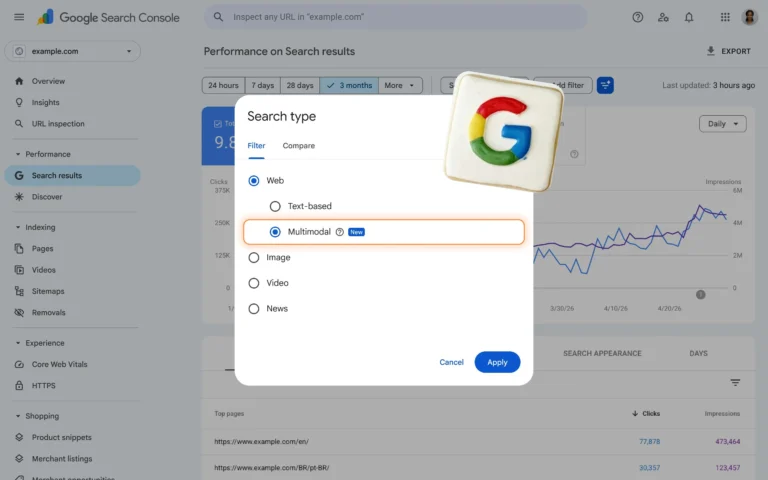
Google’s John Mueller clarified how the new AI-specific impressions report in Search Console actually works — because there’s nuance that matters.
Here’s how it counts:
So a low impression number doesn’t mean your content is invisible in AI answers. It might mean users aren’t clicking to expand the source list. A high impression number means your links are surfacing, but you can’t yet tell if anyone’s acting on it.
This report is early-stage data. Use it directionally, not as gospel.
Immediate (next 48 hours):
Short-term (next 30 days):
Ongoing:
Google is tightening the rules at exactly the moment AI search is getting crowded with people trying to game it. The June 2026 Spam Update isn’t just a technical cleanup, it’s a signal that the old “find the loophole, scale it fast” playbook has a shorter runway than ever.
The marketers who are going to win here are the ones building genuine authority, tracking visibility metrics that actually reflect AI influence (branded search, not just referral traffic), and staying clean while everyone else tests the guardrails.
The guardrails are live. Act accordingly.