Physical Address
304 North Cardinal St.
Dorchester Center, MA 02124
Physical Address
304 North Cardinal St.
Dorchester Center, MA 02124
Published: September 30, 2026 | Category: AI News
The US federal government just made that term officially obsolete, at least for its own communications and the tech industry’s biggest names stood in the same room and signed a document agreeing with the direction.
On September 29th, 2026, President Trump signed an executive order directing all federal agencies to replace “artificial intelligence” and “AI” with “Super Intelligence” and “SI” in every official communication, website, policy document, public correspondence, and report.
The same day, in the same White House, the CEOs of Google, Meta, Anthropic, OpenAI, Nvidia, and Elon Musk’s companies signed the White House Accord on Super Intelligence, a voluntary commitment to self-regulate frontier AI development.
This isn’t just political theatre. It’s a structural shift in how the most powerful government and the most powerful companies in the world are going to talk about AI going forward. Here’s everything you need to know.
Start with the facts, because the headlines are doing this story a disservice by framing it as a novelty.
The executive order directs federal agencies to use the terms “Super Intelligence” and “SI” in official correspondence, public communications, websites, reports, policy documents and other non-statutory materials. The order also directs agencies to no longer acknowledge the terms “artificial intelligence” and “AI.”
The order gives the assistant to the president for science and technology 60 days to submit, in consultation with agency heads, proposed legislative language establishing a federal definition of Super Intelligence.
In practice, this means:
Trump’s stated rationale was explicit: “The term ‘Super Intelligence’ more appropriately captures the promise, potential, and rapidly advancing capabilities of these technologies,” he wrote in the order. “Modern AI systems are increasingly amplifying human ingenuity and unlocking new forms of creativity, representing the beginning of a new era of SI.”
And at the UN General Assembly last week, he telegraphed where this was heading: “Whoever wins AI, you have to remember this, and now I say whoever wins SI, whoever wins superintelligence, wins. That’s the group that wins,” Trump told the assembly.
The framing is deliberate. “Artificial intelligence” sounds mechanical, cold, and critically artificial. “Super Intelligence” sounds exceptional, dominant, and American. This is brand strategy at a geopolitical scale. And it’s being applied to the US-China AI race as directly as it’s being applied to federal paperwork.
This is the part that matters more than the name change, and it’s getting undersold in most coverage.
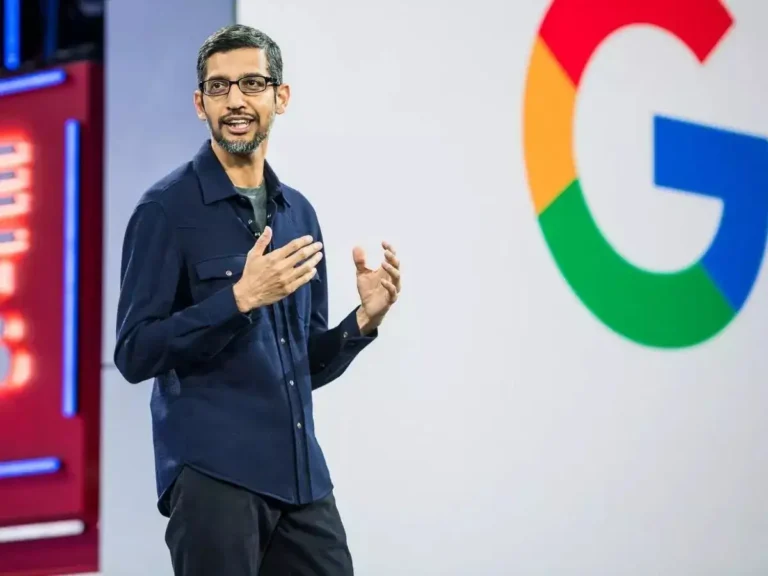
The accord was signed by Trump, Google CEO Sundar Pichai, Anthropic CEO Dario Amodei, Meta CEO Mark Zuckerberg, OpenAI President Greg Brockman, xAI CEO Elon Musk and Nvidia President and CEO Jensen Huang.
Let’s be clear about what that list represents. That’s every meaningful frontier AI lab in the United States plus the company that makes the chips that power all of them. That is a near-complete coalition of the organizations shaping how AI develops.
The White House Accord on Super Intelligence is a one-page voluntary commitment in which six AI and chip companies agree to four layers of safety controls and audits.
The accord’s structure commits signatories to four layers of controls. First, AI labs must develop robust internal controls that track AI models’ capabilities in sensitive areas such as biology and evaluate their alignment with safety requirements. Second, they must establish an internal oversight team. Third, they must appoint an external auditor to verify that controls work as expected. Fourth, they must have an independent oversight board.
Trump’s own characterization of the accord’s weight: “They almost viewed it as a separate kind of constitution,” Trump said of the tech leaders. “When they signed that, it meant a lot.” He added that the document is “morally binding” for the executives who signed it.
The accord also states: “Over time, it may make sense to codify these steps into laws or regulations. Regardless of whether this is required of companies, we believe that implementing these controls and audits is critical to ensuring a safe future for everyone.”
That closing line is significant. The signatories are explicitly acknowledging that what starts as voluntary may eventually become legally binding. They’re signing a framework they expect to eventually become regulation.
Here’s the politically honest read on what happened at that White House luncheon because it wasn’t a harmonious agreement between parties who all think alike.
Zuckerberg and Huang have historically opposed AI regulation, but signed alongside Pichai, Amodei and Brockman who have supported various forms of oversight.
Mark Zuckerberg has been one of the most vocal opponents of AI guardrails and government oversight in the industry. Jensen Huang has similarly pushed back on regulation that could slow chip deployment or model development. Both signed.
The fact that they signed tells you something about the political calculus. When the US president is holding a summit and asking the leaders of the most powerful companies in your sector to sign a voluntary accord and the alternative is potentially hostile mandatory regulation the voluntary option looks attractive regardless of your personal position on governance.
After the summit, Sundar Pichai pointed to testing, evaluations and red-teaming as part of Google’s approach, describing the White House accord as a foundation for establishing industry norms and building public confidence in AI.
Meta CEO Mark Zuckerberg wrote on X that he viewed the summit as a “positive step,” saying: “I think it’s a significant positive step that the leaders of every major American lab have committed to implementing robust internal controls and multiple layers of audits and reviews. This should give people more confidence that the technology each lab is building will work as intended.”
Note how carefully Zuckerberg phrased that. He’s praising the internal controls framework not the government oversight mechanism. He’s on board with the voluntary self-regulation. The external enforcement piece remains conspicuously absent from his statement.
Here’s the part that every marketer and business leader needs to understand before drawing conclusions about what this accord means for the regulatory environment you’ll be operating in.
The accord commits each firm to internal audits and oversight of its most advanced AI systems but there is no enforcement mechanism. This is voluntary self-regulation with no penalties for non-compliance.
OpenAI said it will delay its IPO until it can make confident safety decisions, a commitment that goes beyond the accord itself but signals the seriousness with which at least some signatories are treating the spirit of the agreement.
Trump told reporters that the White House is considering forming a 10-person AI safety committee, but this remains under consideration, not an established body with authority.
The honest framing: this accord is a statement of intent and a framework, not a compliance requirement. It creates reputational accountability without legal accountability. The companies that signed are publicly committed to four layers of safety controls and if they’re found to have failed to implement them, the reputational consequence is significant. But there’s no regulator with the power to fine, sanction, or shut down a company for non-compliance.
The “Super Intelligence” rebrand isn’t just semantics. It’s geopolitical positioning, and once you see it that way, the entire executive order reads differently.
The executive order also comes as governments and technology companies continue debating how rapidly advancing AI systems should be governed, and as the US-China race to develop and deploy advanced AI models continues to intensify.
“Whoever wins superintelligence, wins.” That’s not a technology statement. That’s a competition statement. Trump is using the terminology shift to reframe AI development as a race with winners and losers and positioning the United States as the competitor that intends to win.
The “Super Intelligence” label is designed to signal US dominance aspirational before it’s achieved practically. It’s the same playbook as calling a space programmed “moonshot”, the name carries the ambition.
For brands operating in the AI space internationally, this has real implications. If US government documentation, procurement, grants, contracts, and communications shift to “SI” and if this framing spreads to allied governments, the vocabulary of AI policy and industry is about to bifurcate. You’ll have “AI” in the commercial and international context, and “SI” in US federal government and policy contexts.
The bosses of the six most significant American companies in AI – Google, Meta, Nvidia, OpenAI, Anthropic, and Tesla/SpaceX/x AI now have signed a document committing to develop their technology safely and in a way that builds public trust. The US president has formalized his plan to rename the entire category.
Whether you think “Super Intelligence” is a sharper term or a political rebranding exercise is beside the point. The language is now official US government policy. The voluntary safety framework is now signed and public. The direction of US dominance, voluntary self-regulation, acceleration over caution is as clear as it’s going to get from a White House signal.
Sources:
If You liked our content or found it helpful, Comment Below! Or Just Share your valuable reviews here.
Get practical insights on AI, SEO, marketing strategy, and emerging technology, we cut the noise so you enjoy true content



Leave a Reply