Physical Address
304 North Cardinal St.
Dorchester Center, MA 02124
Physical Address
304 North Cardinal St.
Dorchester Center, MA 02124

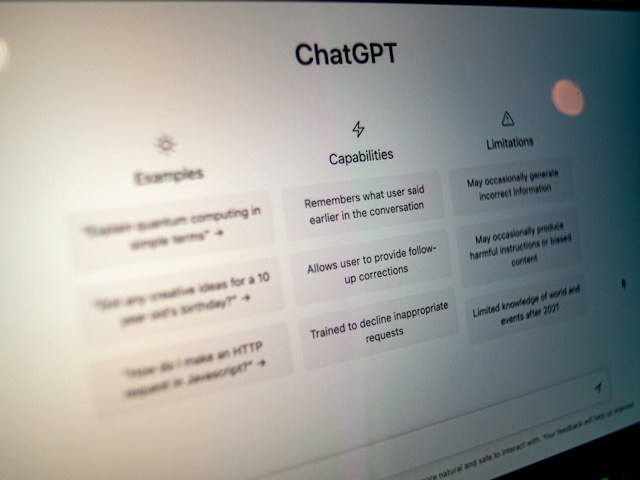
ChatGPT Ads has been live long enough for the hype cycle to wear off. What’s left is real spend, real CPCs, and a platform that’s still figuring itself out.
Here’s everything you need to know about how ChatGPT Ads got here, how the platform actually works, where it’s live, where it isn’t, and how to run a test that won’t waste your budget.
OpenAI didn’t launch ChatGPT Ads with a big-bang global rollout. It’s been a staged expansion, and the pacing tells you something about how cautious OpenAI is being with monetizing a product that most people still use conversationally, not commercially.
February 2026 – Pilot launch in the U.S., Canada, Australia, and New Zealand. Small budgets, early testing, no self-service infrastructure to speak of.
May 2026 – OpenAI announces expansion into the UK, Japan, South Korea, Brazil, and Mexico.
August 2026 – Brazil and Mexico go live. On August 31, self-service Ads Manager access reaches 52 countries.
Today – Ads are buyable in over 40 additional markets through OpenAI’s sales team and ad partners, on top of the self-service footprint.
That’s a fast expansion for a brand-new ad platform. But “available” and “mature” are not the same thing, and that gap is exactly where advertisers are currently getting burned.
This is the part most advertisers skip past, and it’s costing them.
Currently live for self-service (52 countries as of August 31, 2026): including the U.S., Canada, Australia, New Zealand, UK, Japan, South Korea, Brazil, and Mexico, plus dozens more added in the August expansion.
Buyable but not self-service (40+ additional markets): accessible only through OpenAI’s sales team or approved ad partners. If you’re in one of these markets, you don’t get the self-serve dashboard experience — you’re working through a managed relationship, which changes your testing speed and minimum spend expectations.
Not yet supported: a meaningful share of the global market still has no ChatGPT Ads access at all, self-service or otherwise. If your target market isn’t in the confirmed rollout list, don’t assume “coming soon” — verify current availability before you build a Q1 plan around it, because OpenAI’s expansion cadence has moved in bursts (Feb, May, Aug), not a steady drip.
The practical takeaway: your market determines your test economics before your creative does. A campaign that looks affordable in the UK at $5 CPC could triple in cost the moment you expand to Australia or New Zealand with identical targeting and creative. Budget for that variance up front instead of discovering it mid-flight.
One more filter that trips people up: ChatGPT Ads don’t reach ChatGPT’s entire user base.
Ads appear only to users on Free and Go plans. Plus, Pro, Business, Enterprise, and Edu accounts are ad-free by design. Accounts identified as belonging to users under 18 never see ads either.
Go is a paid tier, so it’s not accurate to say ads only reach non-paying users, but several of OpenAI’s higher-priced subscription tiers are entirely walled off from the ad-eligible audience. That’s a real consideration if you’re selling anything premium. There isn’t enough public data yet on the demographics or purchasing power of the ad-eligible segment to know how closely it maps to a luxury or high-ticket customer profile. Common Thread Collective’s high-AOV results suggest it can work, but treat that as a data point, not a guarantee.
Forget everything you know about keyword-based bidding. ChatGPT Ads runs on a relevance-weighted, second-price auction, and the mechanics are genuinely different from Google or Meta.
Here’s what determines whether your ad shows up:
That last point matters more than it sounds. In Google Ads, you bid on a keyword and you know exactly what triggered your ad. In ChatGPT Ads, you’re describing a context and hoping the model matches you to the right conversation. There’s no Auction Insights equivalent. No Impression Share metric. No competitive reporting layer.
Ads Manager gives you the fundamentals, and they may be genuinely useful
You can export everything to CSV for analysis outside the platform, which you should be doing anyway. But there’s no benchmark layer sitting on top of any of it. OpenAI has been direct that it doesn’t yet have performance benchmarks across advertisers, industries, or campaign types.
Translate that into plain terms: you have no idea if your numbers are good. You just have your numbers.
This is where it gets interesting, and where “good performance” starts to look less like a fixed number and more like a moving target shaped by market, vertical, and campaign maturity.
Hostinger tested nearly $70,000 on the platform. Early results looked strong. CPCs competitive with Google Search, real purchases coming through. But as spend scaled, CPMs climbed above $65, and CTR became the real pain point. Specific, narrow use cases outperformed broad messaging by a wide margin.
Common Thread Collective ran a high-AOV ecommerce campaign that scaled from $7/day to over $1,000/day in about a month. After roughly $9,600 in spend, they landed a $4.41 CPC and a 0.94% CTR, with estimated ROAS between 3.3x and 6.8x depending on attribution model. That’s a genuinely strong outcome, but it came from a team layering in third-party analytics, not from trusting Ads Manager numbers alone.
Floyd Blaikie’s B2B test is the one every marketer running lead-gen campaigns should pay attention to. Roughly $7,000 CAD spent, a $9.29 CPC, not unreasonable on the surface. But after deanonymizing the traffic, her team found only five matched ideal customer profiles out of 146 identified organizations behind 336 clicks. The CPC looked fine. The audience quality didn’t.
Synter spent $4,428.84 and surfaced the clearest signal yet that geography moves everything: CPC ranged from $5.10 in the UK to $10.62 in the US, climbing to $17.59 in Australia and $22.89 in New Zealand.
Same platform. Same auction mechanics. A 4.5x spread on cost per click depending entirely on where the ad ran.
If you’ve seen “$3 to $5 CPC” floating around LinkedIn as the ChatGPT Ads benchmark, correct that immediately for yourself and for anyone on your team repeating it.
That figure is OpenAI’s recommended starting maximum CPC bid. It is not an average. It is not a benchmark. It’s a suggested floor to get your first campaign off the ground, nothing more.
The gap between that recommendation and reality is enormous, and it’s not a small variance. it’s a completely different order of magnitude depending on who’s buying and where.
None of this means skip the channel. It means test it with your eyes open. Here’s where ChatGPT Ads earns a real place in the mix:
Genuine intent-based targeting. You’re not guessing at keyword intent, you’re showing up inside an actual conversation where the user has already expressed a need. That’s closer to search intent than most social platforms will ever get you.
First-mover advantage in an under-optimized auction. Early platforms tend to be cheaper before competition floods in and benchmarks get published. If your vertical isn’t already crowded here, this is the window.
A new incremental channel for diversifying paid mix. If you’re overexposed to Google and Meta, this is a legitimate third lane, not a replacement, an addition.
Forces better measurement discipline. Because Ads Manager’s native reporting is thin, the advertisers getting real signal are the ones pairing it with Pixel data, CRM matching, or tools like Triple Whale and deanonymization platforms. That’s a good habit regardless of platform.
Set your own definition of “good” before you spend a dollar. Someone else’s CPC means nothing without their conversion data, their market, and their audience quality behind it.
Budget by market, not by global assumption. A $5 CPC market and a $22 CPC market require completely different test budgets to reach statistical confidence.
Plan measurement outside Ads Manager from day one. Revenue attribution, engagement quality, and account-level identification (for B2B especially) are where the real signal lives right now, not in the native dashboard.
Start narrow, not broad. Every published result so far shows specific use cases outperforming broad messaging. Resist the urge to run a general brand campaign as your first test.
Treat early results with extra scrutiny. With no benchmark layer and limited diagnostic signal, it’s genuinely hard to tell a real performance problem apart from normal delivery variance in an immature auction. Don’t kill a campaign on week one data alone.
Six months in, ChatGPT Ads is real, it’s spending real money for real advertisers, and it’s producing real results. Some results show strong, some mediocre, almost all of them hard to interpret in isolation. OpenAI has said more reporting, more benchmarks, and more insights are coming as Ads Manager matures. Until then, “good performance” isn’t a platform-wide number. It’s whatever moves your business forward, measured by your own criteria, in your own market.
If you’re still sitting on the sidelines waiting for someone else to define “good” for you, you’re not being cautious, you’re ceding a genuinely under-optimized channel to the marketers who are already in there figuring it out. “Test it. Just test it smart”.
If you have already tested the platform, Share your valuable reviews here and help others fix this, If You liked our content or found it helpful, pls Comment Below!
Get practical insights on AI, SEO, marketing strategy, and emerging technology, we cut the noise so you enjoy true content






Leave a Reply