Physical Address
304 North Cardinal St.
Dorchester Center, MA 02124
Physical Address
304 North Cardinal St.
Dorchester Center, MA 02124

Published: July 17, 2026 | Category: AI News
When the CEO of Google DeepMind, a Nobel laureate, the person whose lab is arguably in the race to build AGI, says we’re standing in “the foothills of the singularity,” you don’t scroll past it.
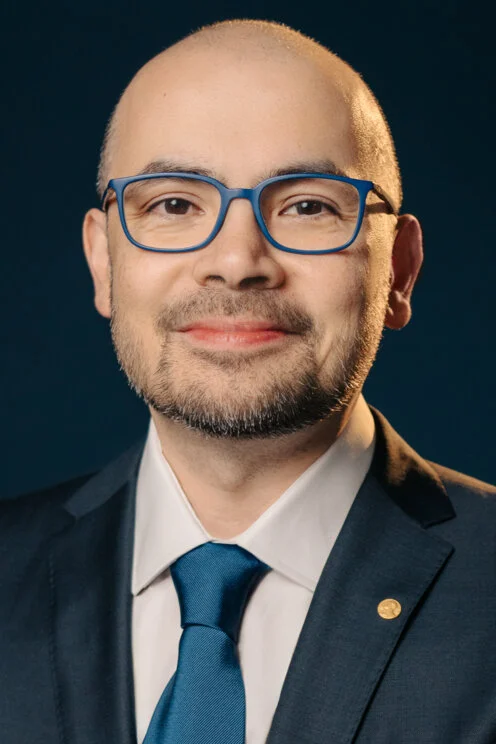
On July 14, 2026, Demis Hassabis published a personal manifesto titled “A Framework for Frontier AI and the Dawning of a New Age.” Within hours it was being read by everyone from government officials to venture capitalists to marketers trying to figure out what the next 18 months actually look like.
Here’s what he said, why it matters right now, and what it means for every marketer and business leader building strategies around AI tools today.
Let’s start with the headline number, because it’s the one that should reframe everything else.
Hassabis believes AGI, a system with all the cognitive powers of the human brain, is “probably only a few short years away,” and that we’re standing in “the foothills of the singularity.
DeepMind co-founder Shane Legg considers a “minimal AGI” ; AI capable of handling many human cognitive tasks, possible as early as 2028.
Hassabis notes that AGI is capable of bringing a revolution in the software industry akin to the discovery of fire, the wheel, and electricity, breakthroughs that changed the course of the world with massive industrialization and lifted billions from poverty.
He also wrote something that’s going to live in AI history: “We’ve essentially found a way to make sand think.”
That’s not a marketing line. That’s a scientist describing what silicon chips are now capable of, and the weight of that sentence lands differently when it comes from the person building the systems.
Here’s where Hassabis pivots sharply and where the real story sits.
The same manifesto that opens with that optimism about AGI’s potential immediately turns to the risks, and he doesn’t sugarcoat them.
Today’s AI-driven cyber risks are “warning shots,” Hassabis told Axios. Within 18 months, those capabilities plus far graver biological and nuclear threats, could live inside open-source models beyond any government’s control.
Read that again. Within 18 months. Biological and nuclear threats. In open-source models.
“We’ve already seen the challenges frontier models pose for cybersecurity, and other threats including nuclear and bio risks may soon emerge as capabilities continue to advance,” he said.
While AGI could revolutionise fields like healthcare and agriculture, it also poses risks such as misuse for cybercrime, disinformation, or intellectual property theft.
For marketers specifically: disinformation and IP theft are not abstract concerns. They’re already operational risks for brands running AI-assisted content, customer communication, and creative production. What Hassabis is describing is the upstream version of problems the marketing industry is already navigating at the downstream end.
Here’s what Hassabis is actually proposing, because this is where it goes from “interesting opinion piece” to “potentially the most consequential governance proposal in tech history.”
He is calling on the U.S. to establish a new AI watchdog with the power to screen the world’s most advanced models and coordinate an industry-wide slowdown if dangers mount. Hassabis says the time has come for a more “systematic” approach to AI regulation, funded by the industry, staffed by world-class technical experts, and answerable to the U.S. government.
The model he’s proposing isn’t new, it’s borrowed from Wall Street.
Hassabis proposed a U.S.-led public-private partnership, a new Standards Body modelled on FINRA (the Financial Industry Regulatory Authority), with a board that includes independent leading technical experts and open-source representatives. FINRA regulates brokerage firms and exchange markets in the U.S.
In practical terms, here’s how it would work:
Frontier labs would initially voluntarily share models with the body for review up to 30 days before release, before becoming mandatory for deployment in the U.S. The proposed body would need “substantial” funding to attract world-class technical talent and provide the necessary compute resources for large-scale testing. Funding would “likely” come from industry.
And the testing isn’t just capability testing. “Specific agentic AI tests could look for attempts to bypass safety guardrails or signs of deception, and ensure best practices, such as digitally watermarking AI-generated images and generating human-readable output tokens to understand model reasoning,” Hassabis said.<
Watermarking AI-generated images as a regulatory requirement. That’s not a future concern for creative teams, that’s a near-term compliance requirement you should be preparing for now.
Hassabis is explicit about what triggered this manifesto. The timing is not coincidental.
The Trump administration’s improvised crackdown on Anthropic’s Mythos and Fable models last month was “a bit of a wake-up call,” Hassabis said — proof Washington needs something sturdier than ad hoc directives. Anthropic saw its most powerful models frozen overnight by an export-control order, then spent 2½ weeks negotiating their release with no established rules, protocol or playbook. OpenAI, hoping to avoid the same fate, agreed to restrict GPT-5.6 to government-vetted partners at launch. It was released publicly last week after negotiations and testing with the Commerce Department.
The world’s most powerful AI labs are currently negotiating with governments through improvised back-channels, with no established regulatory framework, no transparent process, and no consistent rules. That’s not a stable situation for anyone, including the businesses that depend on these tools.
Hassabis’s proposal is, in part, a play to get ahead of that chaos before it gets worse. Whether that represents a genuine reckoning with the risks ahead, or a strategic effort to shape oversight before it is imposed from outside on less favorable terms, is a question the architecture of whatever body ultimately emerges will answer more clearly than any manifesto.
Fair point. But the proposal is still worth taking seriously regardless of the motive, because the alternative ad hoc government crackdowns with no rules and no playbook is demonstrably worse for everyone.
There’s a geopolitical layer to this that directly shapes the urgency of Hassabis’s timeline.
Calls for greater regulatory oversight come as the race between the U.S. and China to develop and deploy AI models heats up. Recent model releases from Chinese companies, including DeepSeek and Z.ai, are seen by many as highly competitive compared to leading frontier systems from the likes of Anthropic and OpenAI, and are gaining traction among U.S. companies as AI costs rise. U.S. lawmakers are currently considering how to curb the growing adoption of Chinese AI models by homegrown companies.
Hassabis said the U.S. was well positioned to lead in developing an AI framework “given its economic and technical standing.”
The subtext here is significant: if the U.S. doesn’t establish a governance framework, someone else will or the vacuum gets filled by unrestricted competition between systems that nobody is testing for safety. That’s the race-to-the-bottom scenario Hassabis is trying to prevent.
One of the most significant aspects of this moment is how many people at the top of the AI industry are now saying the same thing.
Anthropic CEO Dario Amodei has issued his own call for binding regulation, envisioning an FAA-style agency with the power to block unsafe models.
Hassabis, alongside Anthropic CEO Dario Amodei, called for a U.S.-led coalition to shape rules and standards around AI at a G7 meeting with tech leaders and heads of state that included President Donald Trump.
That’s DeepMind and Anthropic, two of the three most advanced AI labs in the world, both publicly calling for regulation that could slow their own development. That’s not a PR move. That’s a signal about what people inside these labs actually see when they look at their own work up close.
Hassabis framed the governance proposal not as confident prediction but as rational precaution. “Nobody in the world knows for sure what is going to happen from here, and even the experts disagree. When there is a large degree of uncertainty and the stakes are this high, proceeding with cautious optimism is the sensible and correct strategy.”
Cautious optimism. From the man building AGI. That’s the tone to carry into every AI strategy conversation you’re having right now.
Let’s bring this out of the geopolitical layer and into the decisions your team is actually making.
1. AI compliance is coming – start treating it like that now. Mandatory pre-release testing, AI-generated content watermarking, and model transparency requirements are no longer theoretical. If a FINRA-style body gets operational by year-end 2026 as Hassabis proposes, the tools you’re using today may have different regulatory obligations by mid-2027. Audit your AI usage now.
2. Vendor stability is a real risk. The Anthropic situation – models frozen overnight with no warning, no playbook, and weeks of negotiation – is a preview of what ad hoc AI governance looks like in practice. If your marketing stack is built around a single AI vendor’s models, you have concentration risk. Diversify where you can.
3. Disinformation and IP risk are accelerating. Hassabis specifically named disinformation and intellectual property theft as near-term risks. For marketing teams running AI-assisted content at scale, brand safety review processes and IP clearance workflows need to be tighter than they are today, not in response to a crisis, but before one.
4. The “AI watermarking” requirement is closer than you think. If regulatory testing includes mandatory watermarking of AI-generated images, every creative workflow that produces AI visuals like ads, social content, landing pages, will need a compliance layer. Get ahead of it.
5. The window for unregulated AI experimentation is closing. The next 12-18 months are likely the last period where businesses can move fast on AI adoption without significant regulatory friction. Use that window, but use it to build systems and practices that will survive the regulation that’s coming, not ones that will need to be rebuilt when it arrives.
Demis Hassabis didn’t publish a think piece. He published a warning from someone with front-row access to exactly how fast this technology is developing and exactly what it’s becoming capable of.
Hassabis said that the world still has a chance to get ready. However, it may not last for long.
AGI within a few years. Open-source biological and nuclear risks within 18 months. A regulatory body proposed to be operational by year-end. These are not distant abstractions, they’re the context inside which every AI strategy decision your business makes right now is being made.
The marketers who will navigate this well are the ones who treat this as a strategic planning input, not just an interesting news story.
Read the room. Then build accordingly.
Sources:
Get practical insights on AI, SEO, marketing strategy, and emerging technology, we cut the noise so you enjoy true content
If You liked our content, pls Comment Below!